Between abundant rainfall and climate challenges: How is the harvest unfolding in Huila today?
The first half of this year has brought a landscape defined by persistent rainfall and a series of complex challenges that our coffee growers must navigate every day.
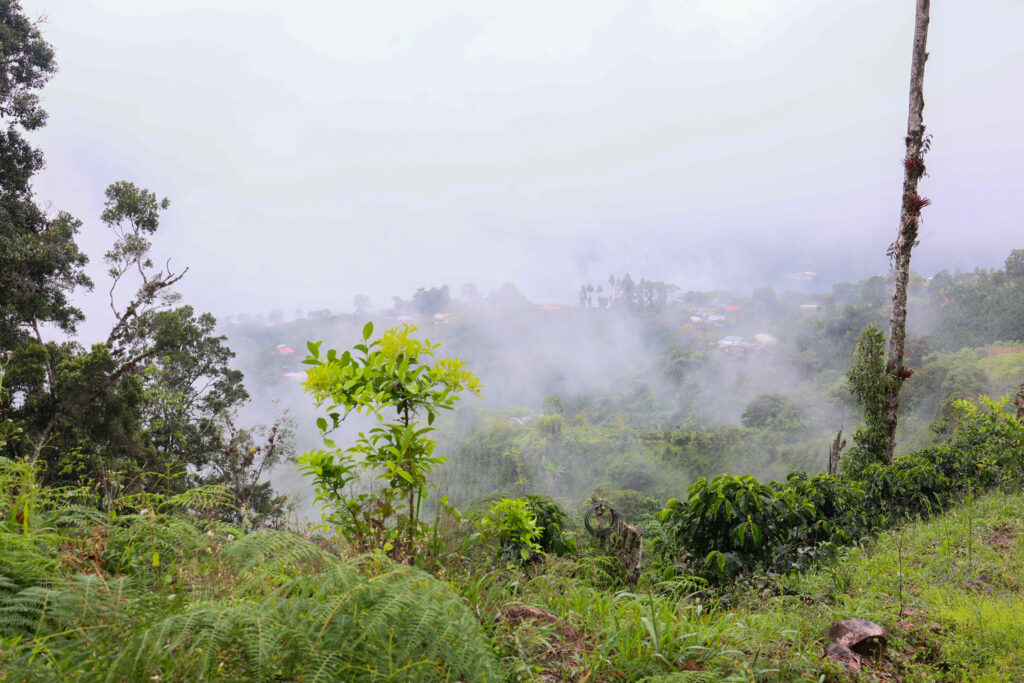
The department of Huila is embraced by the Colombian Massif—the country’s most important water source, where five of Colombia’s major rivers originate. Its mountains, páramos, wetlands, and cloud forests have not only earned UNESCO Biosphere Reserve status, but together with the Eastern and Central Andes, they create a unique natural barrier. This geography regulates the climate and provides consistent cloud cover, naturally shading the soil and directly influencing the physical and sensory quality of the coffee. It is no coincidence that Huila is recognized worldwide as one of the finest coffee-producing regions.
Yet despite this extraordinary natural environment, climate change continues to reshape the realities of coffee production.
An Unexpected Climate Contrast
While the El Niño phenomenon has become established across most of Colombia—with an 81% probability of developing into a Super El Niño according to NOAA, bringing significant water deficits to 28 departments—Huila has experienced the opposite scenario: rainfall levels approximately 31% above average.
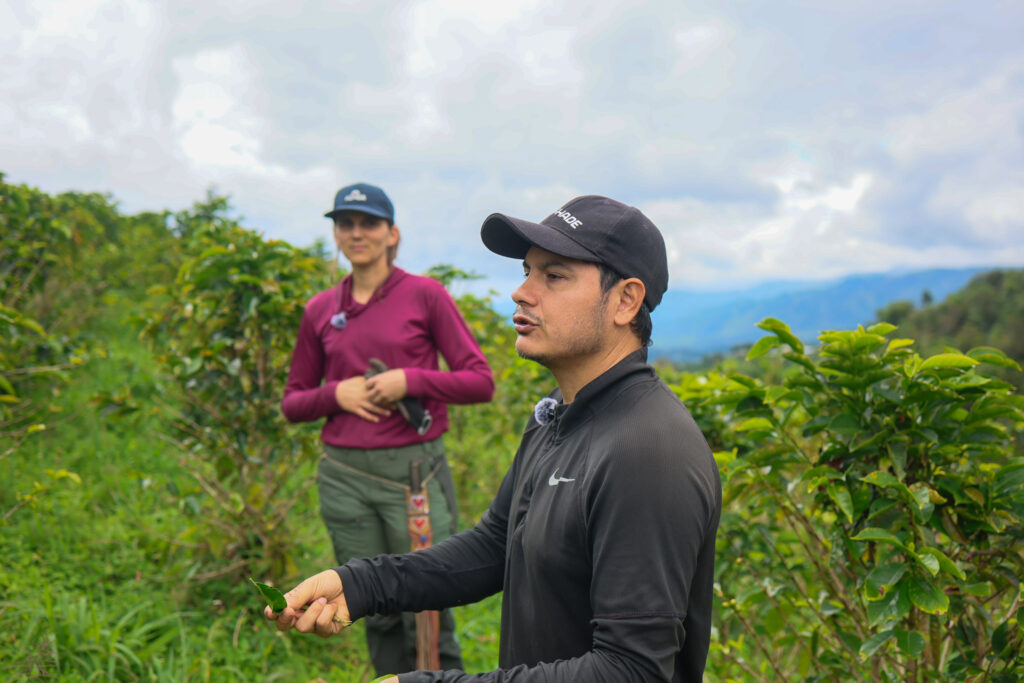
This excess rainfall has significantly disrupted the production cycle. Both the mitaca harvest in southern Huila and the main harvest in the north have experienced substantial delays. Limited solar radiation and lower temperatures slow down cherry ripening, while persistent rainfall makes harvesting increasingly difficult.
When coffee cherries absorb excessive amounts of water, they are more likely to split before reaching full maturity or fall prematurely to the ground, creating ideal conditions for fungal and bacterial development. As a result, defects such as mold and the dreaded phenolic taint become considerably more common.
The Enormous Challenge of Drying Coffee
Drying has become a race against time.
Many producers, unable to rely on the weather conditions typically required for proper drying, are forced to sell their coffee while it still contains around 50% moisture simply to secure the cash flow needed to pay pickers and support their families.
For specialty coffee producers, the challenge is even greater. Reducing moisture content to the optimal range of 10–11% under these weather conditions has become an enormous task.
At Maniwa, we recognize this vulnerability and work to protect both the effort and the quality behind every harvest. For this reason, we provide advance payments to producers with whom we have built long-term commercial relationships.
We firmly believe that transparent trade proves its value during difficult times—bringing together producers, exporters, and roasters to reduce risk where it matters most: at origin.
What You Don’t See Behind a Perfect Cup
Those of us who work in specialty coffee know the theory by heart:
- Slow, gradual, and contamination-free drying.
- Final moisture content between 10% and 11%.
- Water activity (aw) maintained between 0.50 and 0.60.
- Proper storage and export packaging using GrainPro to preserve the coffee’s quality throughout warehousing, milling, and shipment.
What is rarely discussed is the emotional weight of meeting these standards when the weather refuses to cooperate, financial pressure continues to build, and after weeks of dedicated work, you sit at the cupping table fearing the words:
“We’re sorry, your lot has a phenolic defect.”
Thank you for joining us for another edition and for recognizing the human effort behind every coffee bean.
We remain committed to working for—and together with—the origin.